
Lightning rod repair
Lightning rod repair and system inspection
A lightning protection system only works when every piece is connected. Roof work, storms and corrosion break those connections quietly, and a broken system can look fine from the street.
Re-roofing is the most common way a system gets broken: air terminals are pulled off and set back without their bases, or conductors are cut and never rejoined. Hurricanes bend and loosen rods, and Florida humidity corrodes clamps and ground connections over time.
Our lightning rod repair work starts with an inspection of the whole system, from the air terminals on the roof to the ground rods in the yard. We find what is damaged, disconnected or missing, repair it, and confirm the system is continuous again.
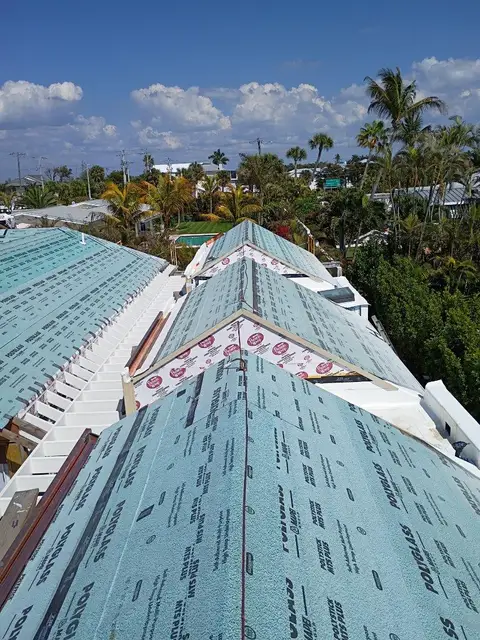
Signs your system needs repair
- A new roof went on and nobody checked the rods afterward
- Air terminals that lean, are missing or have come off their bases
- Conductor cable that is loose, cut, or hanging off the roof edge
- Green or white corrosion on clamps and connectors
- Down conductors or ground rods disturbed by landscaping or construction
- A strike on or near the building, even if nothing looks wrong
What a lightning protection inspection covers
We walk the roof and trace the full system: every air terminal, every run of conductor, each down conductor and each ground connection. We check that the system is bonded to the metal on the roof and that surge protection is in place at the electrical service.
You get a plain list of what we found and what it takes to fix it. Older systems can be repaired as they are or upgraded to meet current standards.
Repairs and upgrades
Repairs range from resetting air terminals and replacing clamps to running new conductor and driving new ground rods. When an old system no longer meets UL 96A and NFPA 780, we upgrade it so the whole system meets the standards again.
How it goes
From estimate to inspection
- InspectWe trace the whole system and note every damaged, loose or missing part.
- ReportYou get a clear list of findings and a free estimate for the repair.
- RepairTerminals, conductors, clamps and grounds are reset, replaced or rejoined.
- Re-checkThe repaired system is inspected again to confirm every part is connected.
If the old system is past saving, we can install lightning rods new, to current standards. On a re-roof, ask about concealed systems that hide the cable. Not sure how exposed the building is? Run the Lightning Risk Check.
More services
Protection for the whole property
Lightning Rod Installation
Complete lightning rod systems for homes, businesses and farm buildings: air terminals, conductors, grounding and surge protection.
Learn moreConcealed Lightning Protection
Lightning protection hidden inside the roof and walls, for homes and commercial buildings that want no visible hardware.
Learn moreStructural Lightning Protection
Protection for docks, boat lifts, barns, fences, HVAC units and outdoor equipment that stand on their own.
Learn moreTree Lightning Protection
Lightning protection systems for valuable or historic trees that stand near homes, pools and gathering spots.
Learn moreNew Construction Lightning Systems
Lightning protection designed in during construction, for builders, contractors and owners building new.
Learn moreQuestions
Lightning Rod Repair and Inspection FAQ
How often should a lightning protection system be inspected?
Have it checked after any roof work, after a hurricane or a strike, and on a regular schedule in between. Florida heat, salt air and humidity wear on connections faster than in most of the country.
My roofer removed the lightning rods. Can you put them back?
Yes. We reinstall air terminals on the new roof, rejoin the conductors and check the grounding so the system is complete again.
Can you repair a system another company installed?
Yes. We inspect and repair existing systems no matter who installed them, and we can upgrade older systems to current standards.
Free estimate
Tell us what needs protecting
Send the form or call (863) 618-7146. Michael Riley and the team will look at the job and give you a free estimate.
- Designed and installed to UL 96A and NFPA 780
- Copper or aluminum systems
- Inspected when the job is done