
Lightning rod installation
Lightning rod installation for Florida homes and buildings
A lightning rod for your house is only one part of the job. We install the whole path a strike needs to reach the ground safely: air terminals on the roof, conductors down the walls, grounding in the soil and surge protection at the panel.
Florida sees more lightning than anywhere else in the country, and a single strike can split roof decking, start an attic fire or burn out every appliance on the circuit. A lightning protection system does not stop the strike. It gives the current a planned, low-resistance route around your building instead of through it.
Every lightning rod installation we do is designed and installed to UL 96A and NFPA 780, the national standards for lightning protection systems. That covers how many air terminals the roof needs, where the down conductors run, how the grounding is laid out, and how the system is bonded to the metal already in and on the building.
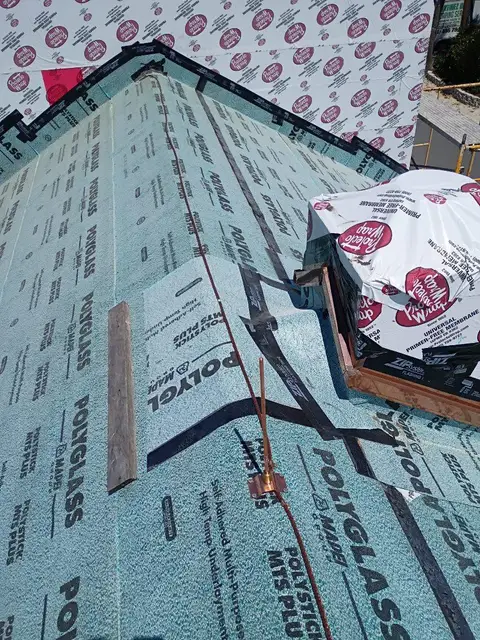
What a complete system includes
- Air terminals (the rods) along ridges, roof corners and other high points
- Copper or aluminum conductor cable connecting every air terminal
- Down conductors on more than one side of the building
- Ground rods driven at each down conductor
- Bonding to gutters, vents, antennas and other metal on the roof
- Surge protection at the electrical service to protect what is plugged in
Copper or aluminum
Copper systems are known for durability and corrosion resistance, and they are often chosen for long-term installations and homes near salt air. Aluminum systems are lighter and cost less while still giving reliable protection.
We help you pick the material that fits the roof, the building and the budget, then build the whole system so every connection matches.
Homes, businesses and farm buildings
We install lightning rods on residential homes, commercial buildings, barns and agricultural facilities, and on outdoor structures such as docks and equipment. Each building is laid out on its own: a tile roof, a metal pole barn and a flat commercial roof all need different hardware and a different conductor path.
How it goes
From estimate to inspection
- Free estimateWe look at the roof, the building height and what is inside, then lay out the system and give you a written estimate.
- InstallAir terminals, conductors, down conductors and grounding go in, routed neatly along roof lines and corners.
- Bond and protectNearby metal is bonded to the system and surge protection is added at the electrical service.
- Final inspectionEvery connection, terminal and ground is checked so the finished system works as one piece.
Already have rods on the roof? Our lightning rod repair work finds what a re-roof or a storm broke. Building new? Ask about new construction lightning protection, or check your lightning risk in a minute first.
More services
Protection for the whole property
Lightning Rod Repair and Inspection
Inspection, repair and upgrades for existing lightning rod systems with loose, damaged or disconnected parts.
Learn moreConcealed Lightning Protection
Lightning protection hidden inside the roof and walls, for homes and commercial buildings that want no visible hardware.
Learn moreStructural Lightning Protection
Protection for docks, boat lifts, barns, fences, HVAC units and outdoor equipment that stand on their own.
Learn moreTree Lightning Protection
Lightning protection systems for valuable or historic trees that stand near homes, pools and gathering spots.
Learn moreNew Construction Lightning Systems
Lightning protection designed in during construction, for builders, contractors and owners building new.
Learn moreQuestions
Lightning Rod Installation FAQ
Does a house in Florida need a lightning rod?
No law requires one on a private home, but Florida gets more lightning than any other state. Homes that are taller than their neighbors, sit on open lots or near water, or hold expensive electronics benefit most. Our Lightning Risk Check gives you a quick read on your own property.
Will lightning rods attract lightning to my house?
No. A lightning rod does not make a strike more likely. It gives a strike that was already going to hit the building a safe path to the ground, so the current does not travel through the framing, wiring or plumbing.
How long does a lightning rod installation take?
Most homes take a day or two. Larger buildings, commercial roofs and concealed systems take longer, and we give you the timeline with your estimate.
What standards do you install to?
Every system is designed and installed to UL 96A and NFPA 780, the national standards for lightning protection systems.
Free estimate
Tell us what needs protecting
Send the form or call (863) 618-7146. Michael Riley and the team will look at the job and give you a free estimate.
- Designed and installed to UL 96A and NFPA 780
- Copper or aluminum systems
- Inspected when the job is done